The Role of the Navy in the Eight-Year Sacred Defense: Changing the Course of the War
By: Captain (N) Gholamreza Tahani, Faculty Member and Head of the Naval Department, Command and Staff College (DAFOOS), Islamic Republic of Iran Army
Navideshahed_ The Persian Gulf is one of the world’s most critical waterways, shining like a gem in the Middle East—a region of unique importance in international geopolitics. Indeed, the Persian Gulf is Iran’s most valuable natural asset. The intelligent people of Iran have long understood the significance of this divine gift, pioneering maritime navigation and the innovations required to sustain it.
The rich oil and gas reserves of the Persian Gulf, combined with access to open seas, have magnified its value. As a significant source of wealth, it has always been a focal point for global powers. Since the Industrial Revolution in Europe, colonial powers have consistently maintained a presence in these lucrative waters, constantly seeking pretexts to consolidate their influence. They have often instigated tensions and disputes among the rightful riparian states to manufacture legitimacy for their interventions. Some even arrogantly bequeathed the occupation of the Persian Gulf to their descendants; yet, those who dreamed of reaching the warm waters of southern Iran were ultimately met with nothing but ash and oblivion—a wish that never materialized for Peter the Great or his successors.
Despite all the conspiracies regarding its identity and ownership, the Persian Gulf remains the Persian Gulf, and it takes pride in its Persian heritage. It remembers the brave men who shed their crimson blood to safeguard its azure waters and now rest in its depths, forever guarding its ancient glory.
Heroes like Bayandor, Kahnamouei, Riazhi, Milanian, Naghdi, and Harischi rose like a phoenix against the superpowers. They sacrificed their lives to make the enemy feel the wrath and resolve of the Iranian nation before it could even set foot on our sacred soil.
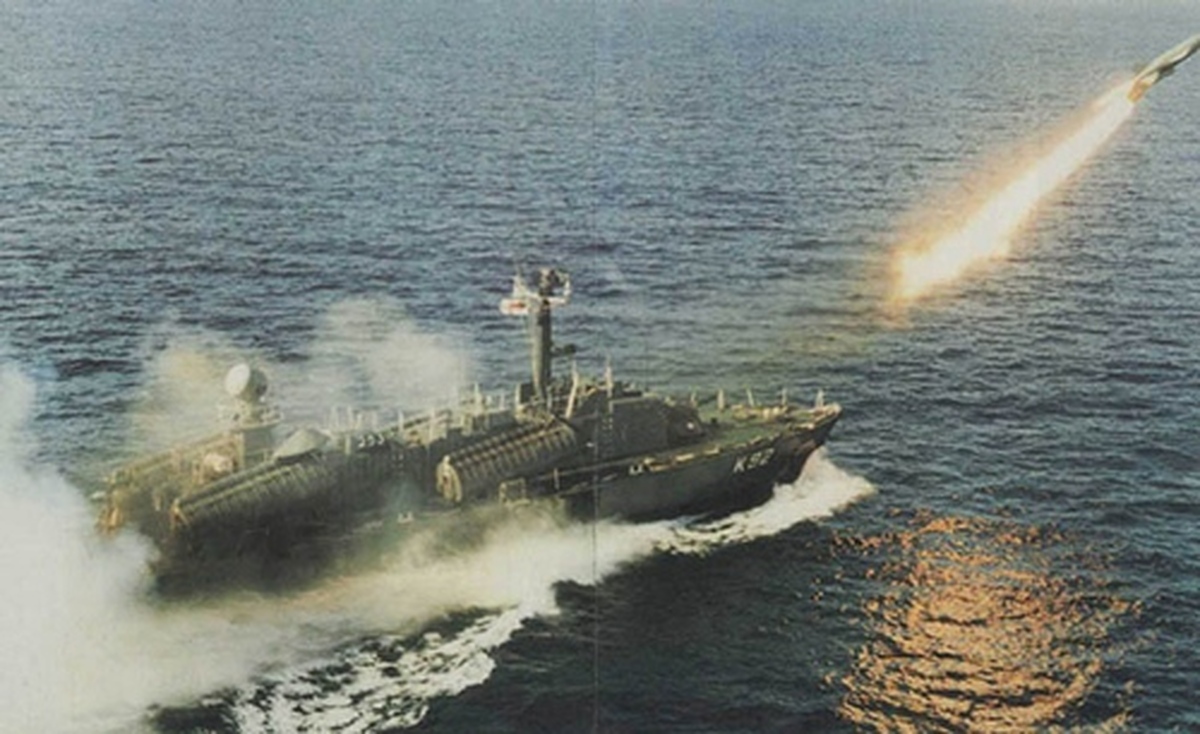
The men of the Peykan missile boat and the comrades of the martyr Hemmati etched the brightest jewel of the Persian Gulf’s defense into the pages of history, writing their “Blood Letter” on December 7th (Navy Day) aboard Iran’s most historic warship. The epic of the 7th of Azar is the story of self-reliance and the dignity of a people who stood against all superpowers, without relying on any of them, and swiftly brought the mercenaries of hegemony to their knees.
Strategic Impact of the Navy in the First Year of War
Many military analysts within the country initially viewed the early years of the Sacred Defense as purely defensive. However, this defense ultimately led to victory through the success of operations such as Morvarid (Pearl), Kaman-99 (Bow), and H-3. By conducting these three offensive operations into enemy territory during the first six months of the war, the Iraqi Navy was rendered completely ineffective, and the enemy’s air force was forced into a position of weakness. Consequently, the economy of the Ba’athist regime faced severe challenges, and managing the logistics for their army—far from their secure bases—became increasingly difficult.
Following Operation Morvarid, whispers of defeat began to echo through the Iraqi presidential palace. Their initial plans, which envisioned the capture of Tehran in a few days, were shattered, leading to desperate pleas for help from superpowers and regional allies.
The Defense of Khorramshahr: A Turning Point
Khorramshahr has always been a vital center of activity for Iran. While its first port facilities were built in 1837, the formal establishment of the Khorramshahr Naval Base dates back to the autumn of 1932. With the arrival of two 1,000-ton gunboats, Bab and Palang, and four 320-ton Simorgh-class vessels, the base began official operations.
During the early days of the Islamic Revolution, long before the full-scale invasion of September 1980, the Ba’athist regime initiated border provocations. On September 7, 1980, violating the 1975 Algiers Agreement, Iraq formally declared that all ships must fly the Iraqi flag to transit the Arvand Rud. This sparked maritime skirmishes between the Iranian Navy (NEDAJA) and the Ba’athist forces.
On September 26, 1980, Saddam Hussein unilaterally declared the 1975 Algiers Agreement void in a speech to the Iraqi National Assembly, asserting that Iraq no longer recognized Iran’s rights in the Arvand Rud. Five days later, on September 31 (September 22, 1980), the full-scale invasion began.
Anticipating the enemy’s malicious intentions, the Islamic Republic of Iran Navy took proactive measures. Before the start of the full-scale attack, the Navy reinforced the Khorramshahr Naval Base with elite Marine Commando units. Furthermore, in an intelligent and timely move, the Navy transferred the bulk of its 8th Naval Brigade’s floating assets—which were at risk of being trapped in the Khorramshahr waterway—to safer operational areas.
The 34-Day Resistance
The occupation of Khorramshahr was of high strategic and political-propaganda value to the Ba’athist regime. Consequently, they allocated a massive concentration of armored, mechanized, and special forces to the task, dreaming of capturing the city in three days.
The resistance of the Naval Commandos and Marines in Khorramshahr is a testament to their valor. Every alley, every palm tree, and every house in Khorramshahr bears witness to their sacrifice. The “Green Berets” of the Navy engaged in house-to-house urban warfare, ambushes, and lightning strikes. Iraqi intelligence chief Wafiq al-Samarrai later wrote in his memoirs, The Ruins of the Eastern Gate: “We were only able to occupy Khorramshahr when we broke the resistance of the last Iranian Naval Commandos.” The enemy, which had hoped to hold a press conference in Tehran’s Azadi Square within a week, was stalled for 34 days at the gates of Khorramshahr.
Beyond Defense: Sustaining Abadan
Even after the fall of Khorramshahr, the Navy remained a pivotal force. During the siege of Abadan in 1981, the Navy utilized hovercraft and RH-53 helicopters to transport fresh troops, ammunition, food, and medical supplies across the water to the besieged city. They also managed the evacuation of wounded personnel and families, a mission that continued tirelessly.
The subsequent defeat of the Iraqi forces in the Zolfaqariyeh district, led by Colonel Kahtari and Captain Samadi (the commander of the Naval Commandos), served as another critical turning point, forcing the enemy onto the defensive.
Post-Liberation Operations
Following the liberation of Khorramshahr (Operation Beit-ul-Moqaddas), the Navy continued its vital mission:
Anti-Missile Defense: Deploying radar decoys and implementing anti-missile fire to counter Iraqi shore-to-ship missiles targeting merchant convoys.
Intelligence: Establishing radar and eavesdropping stations at key points along the waterway.
Offensive Operations: Conducting infiltration and sabotage missions on the western banks of the Arvand Rud.
Special Operations: Destroying the radar platforms of the Iraqi “Silkworm” missile systems at the Ras al-Bishah region.
Major Campaigns: Participation in Operation Valfajr-8 (Capture of the Fao Peninsula) and the Taksa 1 & 2 operations against the Al-Bakr oil platforms.
To conclude, “preventing the burial of history requires describing history.” The Islamic Republic of Iran Navy’s role in the Sacred Defense remains an enduring example of professional excellence, tactical intelligence, and unwavering commitment to the sovereignty of our beloved homeland.