Ashura Strategic Driving Force for Islamic Ummah, Model of Resistance: Senior Cleric
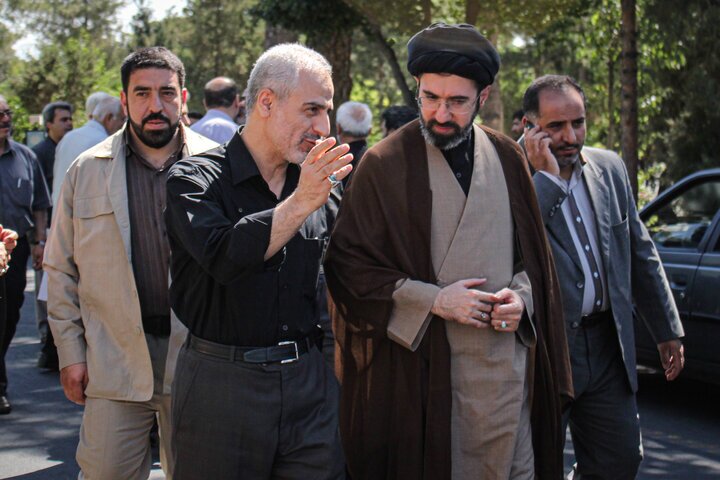
The head of Iran’s Islamic Seminaries, Ayatollah Alireza Arafi, said the message of Ashura continues to serve as the strategic driving force of the Islamic Ummah and a living model of resistance in the modern era.
In a message marking the arrival of the lunar Hijri month of Muharram, Arafi described the uprising of Imam Hussein (AS) as a timeless and living movement that continues to guide the Muslim world amid today’s major transformations.
He said Karbala was never confined to the events of 61 AH, but remains “a dynamic and living current in the depth of our contemporary struggles.”
Arafi said the movement of Imam Hussein gives the Islamic Ummah the strength to break “the chains of weakness and dependence” and restore dignity and power among nations.
He stressed that Ashura combines two inseparable dimensions: mourning and epic resistance.
According to Arafi, the emotional dimension of mourning preserves the blood of Karbala and defends the conscience of humanity against oppression and arrogance.
At the same time, he said, the epic dimension presents Imam Hussein (AS) as “a revolutionary and civilization-building leader” who offers humanity the highest model of resistance against domination and cultural distortion.
Arafi said scholars, media figures, artists and writers today carry a historic responsibility to introduce Imam Hussein to younger generations and the world not as “an isolated and defenseless victim,” but as “the architect of the future and designer of new civilizational models.”
He described the tragedy of Karbala as a strategic force capable of breaking the legitimacy of oppressive systems and building the ethical and human foundations needed to guide modern struggles.
Read More:
The senior cleric also underlined the transhistorical authority of Karbala in the “grand project of reforming the Ummah.”
He said Imam Hussein’s uprising was never about gaining power, tribal interests or factional rivalry, but was instead a decisive response to a deep deviation threatening the path of Islam in its earliest period.
Imam Hussein stood against an organized current seeking to marginalize divine revelation, distort Quranic values and empty Islam of its mission and role in human life, he added.
He said the position of Imam Hussein as Imam and his direct connection to the source of revelation grant the movement permanent legitimacy and make following the Hussaini path a vital necessity for the Ummah.
Arafi quoted Imam Hussein’s famous declaration, saying the Imam rose “only to seek reform in the nation of my grandfather.”
He said the reformist spirit of Ashura today must rescue humanity from intellectual distortion and moral decline in an age dominated by materialism and consumerism.
Referring to the Imam’s words on the Day of Ashura, Arafi said the message, “If you have no religion and do not fear the Hereafter, then be free in your worldly life,” still addresses modern humanity and calls people back to justice, dignity and freedom.
The cleric warned that extreme liberal materialism and globalized systems have emptied human beings of spiritual depth and moral authenticity.
Arafi then turned to the contemporary political dimension of Ashura, describing its message as the direct engine behind the strategic struggles of the Islamic world.
Read More:
He cited Imam Hussein’s declaration, “Humiliation is far from us,” saying its practical meaning today is the total rejection of domination and modern colonialism.
Arafi said the resistance and steadfastness of Iran, Lebanon and the broader regional resistance front represent “the living continuation of Karbala.”
He warned against compromise with “the usurping Zionist regime,” saying any retreat from national sovereignty or abandonment of Palestine amounts to renewing allegiance to “the Yazid of the age.”
He also stressed the need to support resistance movements and protect al-Quds to preserve deterrence and Islamic dignity.
Moving to scientific and civilizational issues, Arafi said the contemporary meaning of “seeking reform” requires the Islamic world to close technological and knowledge gaps.
He said mastery of advanced sciences, artificial intelligence, economic sovereignty and self-sufficiency are among the greatest duties facing Muslim societies today.
According to Arafi, such progress would free the Ummah from international coercion and shift the balance of power in favor of the oppressed.
He added that Imam Hussein’s movement transcends sectarian disputes and internal divisions because the Imam rose for the reform of the entire Ummah and the salvation of humanity.
Referring to Imam Hussein’s cry on the battlefield of Karbala, Arafi said the Imam’s call — “Is there anyone to help us for the sake of God?” — remains alive and relevant today.
He warned that silence by intellectuals in the face of attacks on Islamic values, the killing of oppressed nations and the manipulation of youth consciousness resembles the inaction of those who abandoned Imam Hussein in 61 AH.
“The support of truth in today’s world cannot be realized except through courageous speech, jihad of clarification, and standing against the empire of media lies,” he said.
Read More:
In the final part of his message, Arafi said the Islamic world suffers neither from a lack of material resources nor from a shortage of human potential.
Rather, he said, the Muslim Ummah stands on the threshold of awakening the same “Hussaini willpower and insight” capable of transforming global equations and rewriting history.
He expressed confidence in the divine promise of the victory of the oppressed and the collapse of tyrannical powers, voicing hope that the season of Ashura would pave the way for a new Islamic civilizational revival rooted in human nature and conscience.