A Wound That Remains After Decades:
The Downing of an Iranian Passenger Plane—A Document of US Crime in the Persian Gulf Skies

July 3, 1988, marks one of the darkest days in the history of civil aviation. Iran Air Flight 655, a passenger aircraft, was targeted by two missiles fired from the US warship USS Vincennes over the Persian Gulf, ending the flight in catastrophe.
According to the NavideShahed news agency, the criminal nature of the United States has long been evident to the Iranian people. These atrocities are not limited to the two recent wars but have been witnessed over several decades. One such incident occurred on July 3, 1988, when the skies of the Persian Gulf were stained with blood.
Iran Air Flight 655, flying from Bandar Abbas to Dubai, was targeted by two missiles from the USS Vincennes, resulting in the death of all 290 passengers and crew. The incident took place during the final months of the Iran-Iraq War, at the height of military tensions in the Persian Gulf—a tragic event that remains one of the most significant legal and political cases stemming from the eight-year war.
A War That Crossed Borders
The Iran-Iraq War began on September 22, 1980, with a massive invasion by the Iraqi army. The Iraqi regime launched a widespread military operation against Iran with the goal of seizing Iranian territory, shifting the regional balance of power, and consolidating its position within the Arab world. In contrast, the Islamic Republic of Iran, after organizing its forces, gradually seized the initiative on many fronts.
As the war dragged on and Iraq failed to achieve its initial objectives, the scope of the conflict expanded beyond land borders. One of the most critical arenas of confrontation was the Persian Gulf, a region through which the bulk of the region’s oil exports passed; any insecurity there carried vast economic and political consequences.
When Oil Became a Battlefield
Beginning in 1984, a phase of the war known as the “Tanker War” began. By attacking oil tankers and Iranian oil facilities, Iraq sought to disrupt Iran’s oil exports and increase economic pressure on Tehran.
Following the Karbala-5 operation, these conflicts intensified. In a policy of reciprocation, Iran limited the passage of oil tankers linked to Iraq in the Persian Gulf. Speedboats of the Islamic Revolutionary Guard Corps (IRGC) maintained an active presence in the Strait of Hormuz, monitoring the movement of vessels associated with Iraq.
The escalation of tensions led the United States to expand its military presence in the region. US warships entered the Persian Gulf under the declared objective of protecting oil tankers of Washington’s allies—a presence that gradually turned the US into a direct participant in the war.
The Vincennes: The Most Advanced Ship to Enter the Persian Gulf
In June 1988, the missile cruiser USS Vincennes, commanded by Captain William Rogers, entered the Persian Gulf. The ship was equipped with the advanced Aegis radar system, capable of tracking dozens of air and sea targets simultaneously; it was considered one of the most sophisticated pieces of US military equipment at the time.
According to published data, this system was capable of identifying the type, trajectory, speed, and altitude of targets with high precision. This later became a central point of contention regarding the cause of the Iranian passenger plane’s downing, as many military experts maintained that distinguishing between an Airbus passenger plane and an F-14 fighter jet should not have been difficult for such a system.
On the morning of July 3, 1988, Iran Air Flight 655 arrived in Bandar Abbas from Tehran as scheduled. Following a short stop for passenger boarding and refueling, the plane, piloted by Captain Mohsen Rezaian—who had thousands of hours of flight experience—departed Bandar Abbas for Dubai.
The aircraft was ascending within the designated international corridor and, according to recorded data, had received clearance from the control tower to continue its ascent. There were 290 people on board, including crew, men, women, children, and citizens of several nations, none of whom imagined that this short journey would never reach its destination.
Four Minutes to Disaster
Moments after the plane took off, the Vincennes radar identified a target in the sky. In the command room, warnings were sent over military frequencies; however, the passenger plane was using civilian frequencies and was unable to receive these messages.
The officer in charge, attempting to identify the unknown aircraft, consulted his codebook. Based on the altitude of 11,000 feet, he speculated that it was a powerful F-14 Tomcat fighter. He announced this “discovery” to his colleagues in the command room, who watched the large monitors, believing that one of the F-14 Tomcats purchased by the former Iranian Shah was now attacking them. This was despite several facts that ruled out this possibility:
Captain Rogers knew that an F-14 did not have the capability to carry air-to-ship missiles.
Intelligence radars display the bearing, range, altitude, and speed of an aircraft. Given that the altitude shown by the radar was increasing every moment, the possibility of a suicide attack was ruled out.
The difference in dimensions between an F-14 and an Airbus is visible on radar. The length of an F-14 is approximately 62 feet, while the Airbus is 177 feet.
After locking onto a target, the specific sound reflection of the waves identifies the type of aircraft. Radar operators can distinguish between the sound of a helicopter, a propeller plane, a missile, a passenger plane, or a jet fighter.
Later, some American officials and military-industrial experts questioned the “F-14” claim: “How could an F-14 be considered a threat to the Vincennes? The F-14 is an air-to-air weapon with limited air-to-ground attack capabilities.” Another question was: “How could the world’s most modern radar system fail to distinguish an Airbus from an F-14?”
Despite these contradictions, one of the ship’s officers misidentified the target as an F-14 fighter. This occurred even though available data regarding altitude, speed, flight path, and flight type corresponded perfectly to those of a commercial airliner.
Two Missiles and the End of a Flight
At 10:24 AM, the Vincennes fired two surface-to-air missiles at Flight 655. The missiles struck the Airbus, which disintegrated over the Persian Gulf. Its wreckage fell into the waters near Hengam Island.
All 290 passengers and crew lost their lives. Among the victims were 66 children, dozens of women, and foreign nationals. This incident remains one of the deadliest attacks on a passenger plane in the history of civil aviation.
The waters of the Persian Gulf were turned red. Disintegrated bodies, ownerless clothing floating on the water, shoes without feet, and feet without shoes were scattered among the waves. As bodies appeared on the surface, the sight was heartbreaking: the mangled body of a seven or eight-year-old girl, the body of an innocent old man, and finally, an eight-month-old infant… a scene that was not only a humanitarian disaster but a clear document of an obvious crime.
The US Narrative and Unanswered Questions
Following the incident, US officials claimed that the Vincennes crew had mistaken the plane for an F-14 fighter and described the action as “self-defense.”
However, subsequent reports and statements by some military officials and experts raised numerous questions. The plane was moving on an international commercial route, its altitude was increasing, and the Vincennes’ advanced systems were capable of precise target identification. Furthermore, reports emerged indicating the ship was in Iranian territorial waters at the time of the incident—a detail that contradicted the initial US narrative.
Iran’s Response: Legal and Political Pursuit
Following the tragedy, the Islamic Republic of Iran deemed this act a flagrant violation of international law and pursued the matter at the United Nations and the Security Council.
The late founder of the Islamic Republic, Imam Khomeini, who was President at the time, issued a statement holding the US President responsible for this brutal massacre, calling it one of the greatest war crimes of the modern era, and asserting the Iranian people’s right to seek justice. Ali Akbar Hashemi Rafsanjani, then-Acting Commander-in-Chief of the Armed Forces, declared that this American crime would not go unanswered. Foreign Minister Ali Akbar Velayati, in a letter to UN Secretary-General Javier Pérez de Cuéllar, demanded the explicit condemnation of the perpetrators and the immediate dispatch of a fact-finding mission to the region.
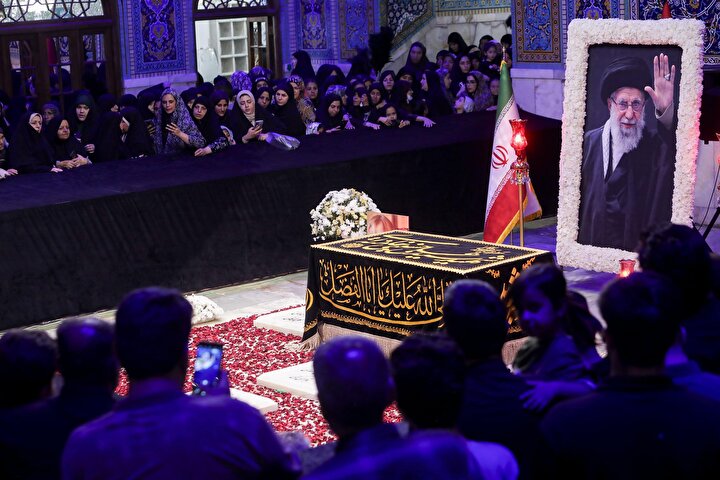
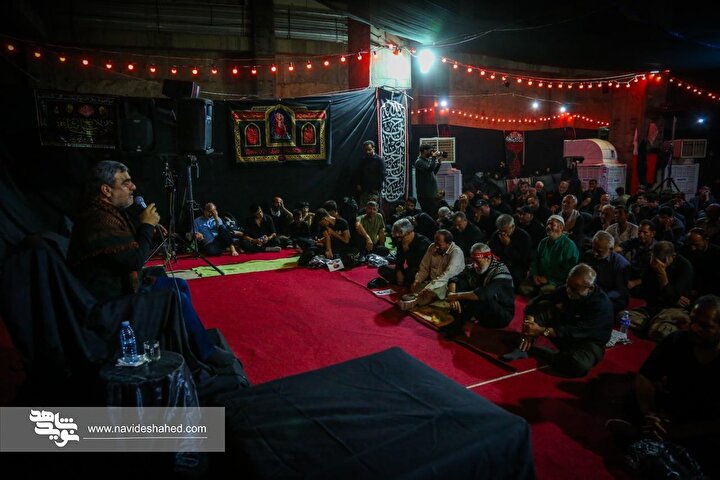
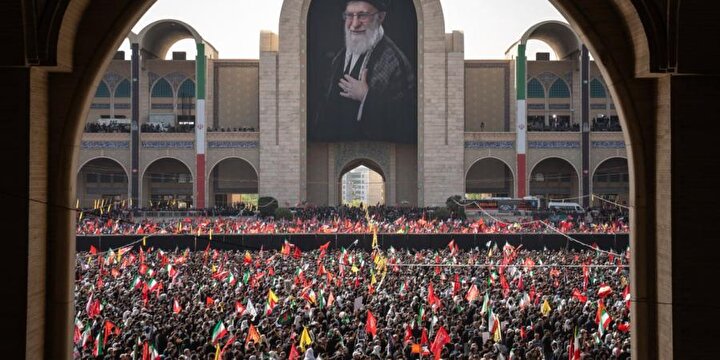
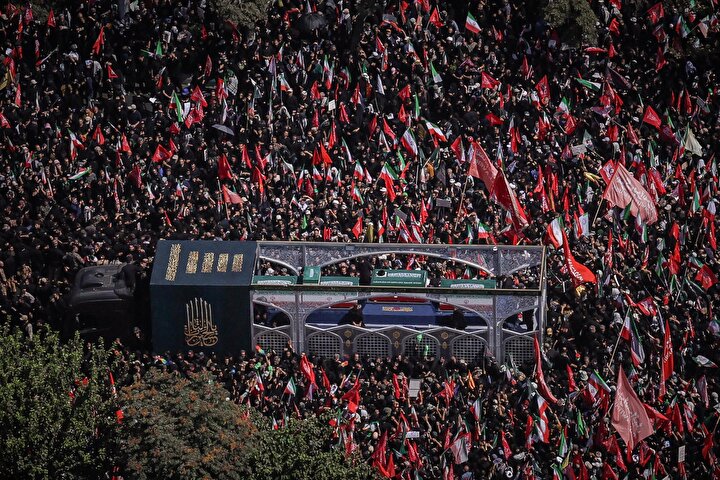
The nation observed a period of public mourning, and funeral processions for the victims were held with massive public participation.
The Medal that Sparked Controversy
One issue that has consistently drawn attention in the narrative of this incident is the awarding of the “Legion of Merit” medal to William Rogers, commander of the Vincennes, years later.
This action drew widespread backlash, with critics viewing it as evidence of US state endorsement of the warship commander’s actions, even though US officials insisted the medal was awarded for his overall military service.
A Case Never Closed
The Flight 655 tragedy was not merely a military event; it became one of the most important international law cases in the field of aviation security. Iran filed a complaint with the International Court of Justice (ICJ). The case was eventually resolved through a settlement between the two countries, and the US paid compensation to the families of the victims without accepting legal responsibility.
Nevertheless, the dispute regarding the nature of the incident remains. Iran has viewed the action as a violation of international law and an attack on a civilian aircraft, while the US has consistently insisted on the “misidentification” narrative.
The World Condemns the United States
“Will Rogers,” the commander of the Vincennes who ordered the attack on July 3, later admitted that the downing of the Iranian plane became a stain on his record. In an interview, he stated: “I was proud to receive the medal for my years of service, but the downing of the Iranian Airbus in the Persian Gulf is a stain on me that will never be erased.”
The scale of this event was such that it shattered America’s claims regarding human rights. Many of those involved in the attack suffered severe psychological distress, and some of the perpetrators reportedly committed suicide. According to the Secretary-General of the Association for the Defense of National Interests: “The dimensions of this crime trapped American officials. It also disgusted global public opinion.”
The plight of the Iranian passengers did not go unnoticed by global media. The Istanbul-based newspaper Hürriyet wrote in its headline: “The World Curses America.” Ireland’s The Times described the attack on the Iranian civilian plane as a crime against humanity by a US warship, while Italy’s Corriere della Sera noted: “The floating bodies of the innocent Iranian passengers left an ugly image of America that will be difficult to repair.” La Repubblica, Italy’s largest newspaper, questioned the American human rights slogan, writing: “So far, America’s response to Iran and the rest of the world has not gone beyond a simple expression of regret, which is insignificant for a country that claims superiority.”
A Wound That Remains After Decades
More than three decades have passed since the downing of Flight 655, but this incident remains one of the most painful events in the history of the Iran-Iraq War and one of the most significant cases related to civil aviation security.
This event not only impacted the political course of the final days of the war but also remains in the historical memory of Iranians as a symbol of the expansion of war toward civilians. The names of the 290 victims of this flight are honored every year on July 3; a flight that, only minutes after takeoff, was left unfinished in the skies of the Persian Gulf and became one of the most enduring tragedies in contemporary Iranian history.