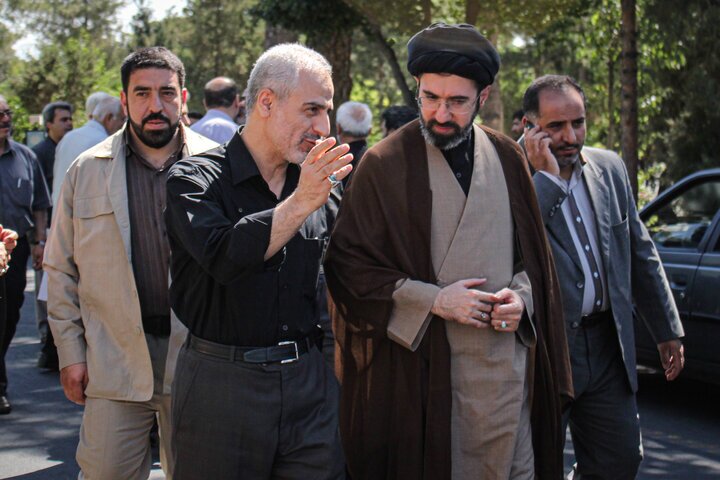
Memoirs of Seyed Morteza Nabavi:
The Shah’s Flight and the Joy of the Iranian People
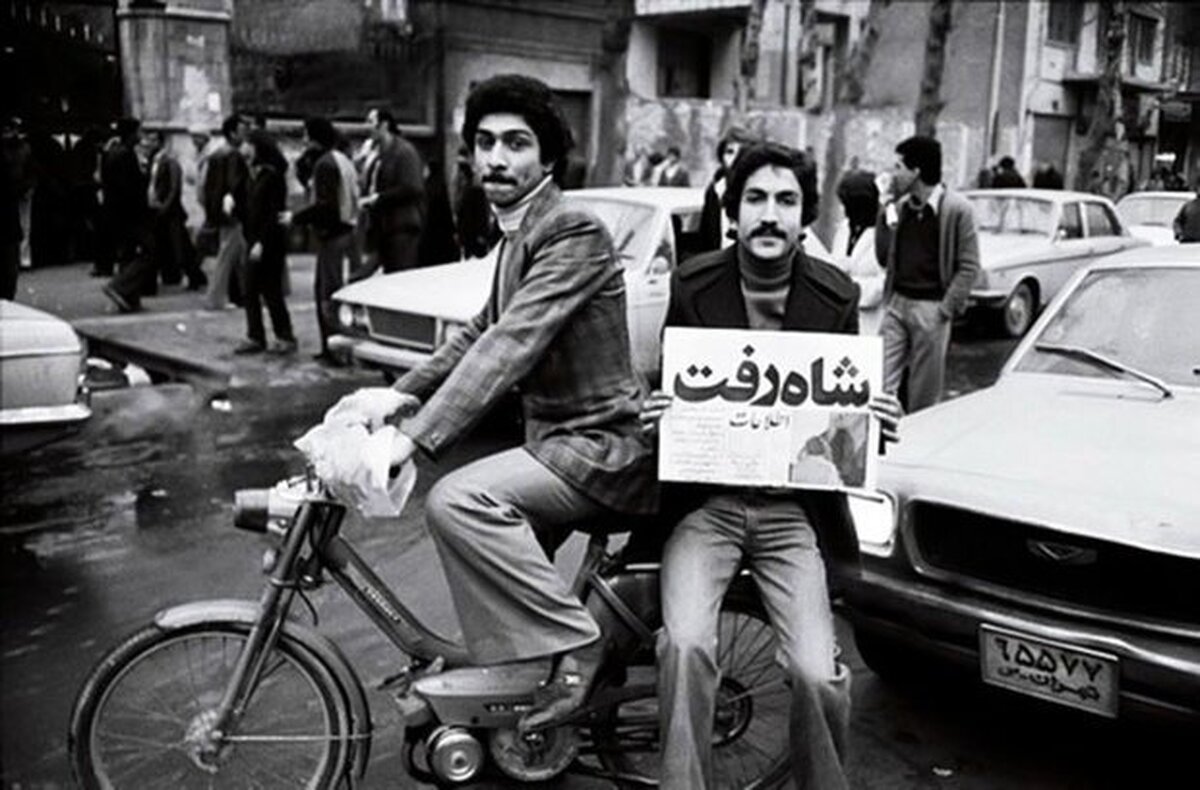
One of the happiest days for the people of Tehran and all of Iran was the day the Shah fled. I was on the street in my Gian car when I noticed newspapers with the large headline: “The Shah is Gone”… What you are about to read is part of the memoirs of revolutionary activist Seyed Morteza Nabavi.
According to NavideShahed, Seyed Morteza Nabavi, son of Seyed Ahmad, was born on November 27, 1947 (6th of Azar 1326 SH) in the Mohammadieh Mosque neighborhood of Qazvin. With his convictions, he tried every means possible to ensure the revolutionaries continued their political activities against the Shah’s regime, even enduring terrible torture for this cause. SAVAK agents arrested him in late October 1973 (Mehr 1352 SH) and transferred him to the Joint Committee Prison.
Morteza Nabavi was sent to Qasr Prison after enduring six months of torture at the Joint Committee. He was imprisoned for two years, and after serving his sentence, he was transferred to Evin Prison, where he was eventually released after a few months.
After the victory of the great Iranian nation against the oppressive Pahlavi regime, he became the Minister of Posts, Telegraph, and Telephone in the cabinet of Martyr Bahonar on August 13, 1981 (22nd of Mordad 1360 SH), and retained the same position in the cabinets of Ayatollah Mahdavi-Kani and the Engineer [Mir-Hossein Mousavi]. He served two terms as a representative for the people of Tehran in the Islamic Consultative Assembly (Parliament) and, since the late fifth term of Parliament, has been a member of the Expediency Discernment Council. Furthermore, he has been the managing director of Resalat newspaper since its establishment.
Mohammad Reza Pahlavi’s Escape
One of the happiest days for the people of Tehran and all of Iran was the day the Shah fled. I was on the street in my Gian car when I noticed newspapers with the large headline: “The Shah is Gone.”
I grabbed one of those newspapers and affixed it to my car window, turned on my lights, and drove through the streets. Near Sepahsalar School (currently Martyr Motahari School), traffic jammed, and all the cars were honking their horns. People were spontaneously distributing sweets and chocolate in the streets.
Clergy Sit-in and Efforts to Welcome Imam to Iran
During the clergy’s sit-in at Tehran University, we were present on the campus. The clerics had gathered in the university mosque. I recall that Mr. Mohammad Montazeri was very active during that event. Gentlemen came and gave speeches.
Outside the university, military vehicles were moving back and forth. The Imam had instructed people to offer flowers to the army personnel, and gradually, the soldiers began to align and move in step with the people.
After Mr. Rajai was released from prison, we visited his home. I remember it was winter, and there was a shortage of oil. His house was cold; he brought a blanket, and I pulled it over my legs. Afterward, we sat and discussed for hours, and our connection with him continued subsequently.
Refah School and Establishing the Imam Welcome Headquarters
With the announcement of the Imam’s return to Iran and the formation of the Headquarters for Welcoming Hazrat Imam, we were stationed at Refah School. Mr. Rajai, Engineer Hossein Mozaffarinejad (a third-term MP), Mr. Shojaeian, Mr. Mohammadi, and others were also there. Messrs. Saeed Mohammadi and Mohammadi established their propaganda operations at Refah School and began the work of duplicating the Imam’s leaflets, essentially setting up a propaganda unit there.
We carried out various tasks at Refah School; we stood guard at night and used wooden sticks as weapons. This continued until the appointed day—the day of Hazrat Imam’s arrival. On the day the Imam was scheduled to arrive in Iran, a group of our colleagues were set up at the television station to broadcast the ceremony of the Imam’s entry into Iran.
They had established contact with us at Refah School. On the day of the Imam’s arrival, we were stationed at Refah School, waiting for the Imam to arrive here after his speech at Behesht-e Zahra Cemetery. We were watching the footage of the Imam’s arrival on television when the picture suddenly cut out.
At that time, Shapour Bakhtiar was in charge, and he had blocked the broadcast. As soon as the images were cut, people poured into the streets. I was upset that we could not leave Refah School and waited there until the afternoon for the Imam’s arrival.
Source: Memoirs of Seyed Morteza Nabavi