Glory to God and to the Sixteenth of February
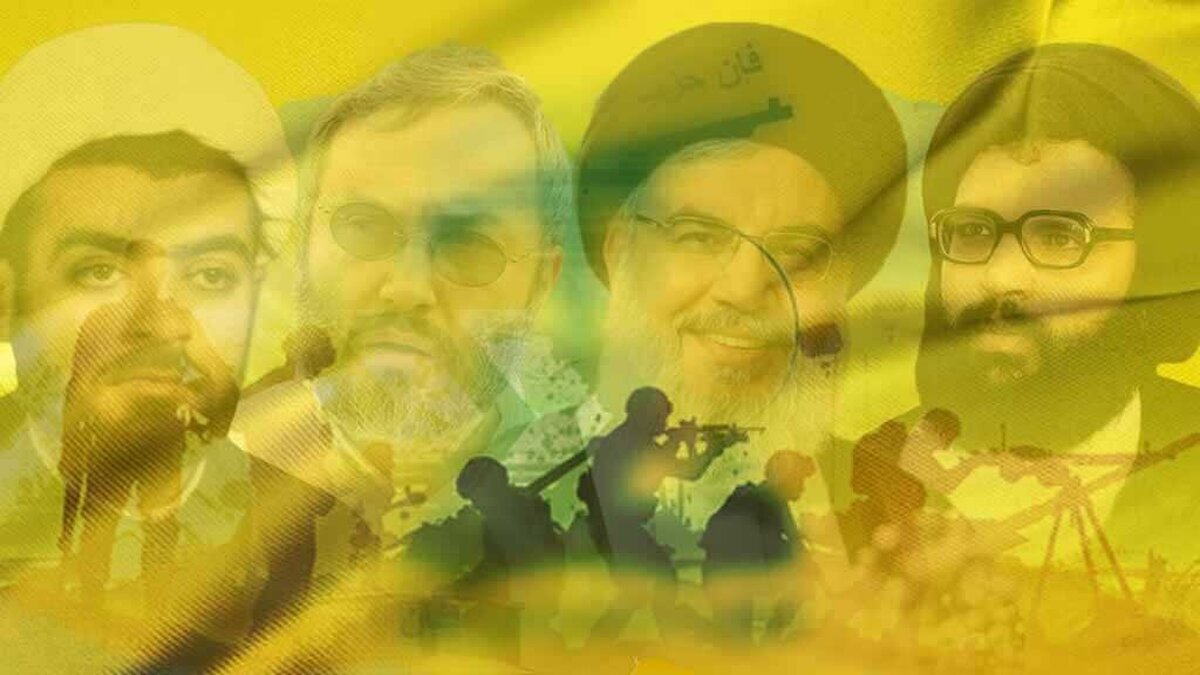
Sheikh Ragheb Harb, the Sheikh of the Martyrs of the Islamic Resistance, was a pioneering and exemplary figure-true in his faith in God and in the rights of His servants, both individual and collective; deeply conscious of his responsibility toward society and the homeland; tireless in striving and struggling to establish justice and liberation, to oppose oppression, to resist occupation, and to confront projects of humiliation and imposed tutelage.
It is a defining hallmark that, at the forefront of the martyrs of the Islamic Resistance stand founding leaders, secretaries-general, and figures in whom the nation takes pride – pride in what they bestowed upon it and upon its history, present, and future: a clear vision, objective motivations, and a forward – looking outlook toward promising paths of comprehensive change. A change befitting the sincerity of their belonging, their certainty in the justice of their cause, and the scale of sacrifices offered with devotion and generosity for the sake of advancement and the common good – offering humanity a civilizational model in the fields of liberation, human dignity, the protection of human rights, and adherence to truth and justice in politics, governance, economics and public life, across the broad national, regional, and human sphere.
Sheikh Ragheb Harb, the Sheikh of the Martyrs of the Islamic Resistance, was a pioneering and exemplary figure-true in his faith in God and in the rights of His servants, both individual and collective; deeply conscious of his responsibility toward society and the homeland; tireless in striving and struggling to establish justice and liberation, to oppose oppression, to resist occupation, and to confront projects of humiliation and imposed tutelage.
From the earliest days of the Zionist occupation of Lebanon in 1982, he emerged as the courageous scholar-ascetic, sincere, upright, loving, companionable, confident, and bold – possessed of unwavering certainty in his people’s right to security, sovereignty, liberation, progress and to choosing the civilizational model that reflects their convictions and aspirations. Thus, he became a permanent presence in the hearts and minds of his people, a beloved shadow in every home, neighborhood, town, and city. He was the living embodiment of all that he called others to: love, sincerity, generosity, sacrifice, unity of purpose, support for the poor, aid to the needy, compassion for the oppressed, nobility toward the honorable, and justice for those with rightful claims. Through his conduct, he rose to the rank of a role model whose credibility, integrity, and selflessness in public affairs none could challenge, and whose example led the way in advancing causes of public interest.
He embodied resistance in all its intellectual, moral, behavioral, and political dimensions. Through his presence and actions, he exposed the evils, corruption, and injustice of the occupying enemy. He stood at the forefront of confronting its arrogance and tyranny, instilling in the people a growing confidence in themselves and their ability to challenge the occupiers, defeat their forces and schemes, and leave a lasting mark on memory and history: “The stance itself is a weapon, and a handshake is recognition.”
As for Sayyed Abbas Al-Moussawi, the Sayyed of the Martyrs of the Islamic Resistance, he secured for himself a place among the great leaders in the history of peoples and movements of revival and resistance. He evolved from a student – or scholar – of the religious seminary into a mission-driven leader, exemplary in both steadfastness and tenderness; in calm and in revolution; in principle and in practice; in loyalty to the supreme religious authority and leader of the nation; and in brotherhood and faithfulness to the resistance fighters-appreciating their efforts, embracing their concerns, living among them, constantly checking on their conditions, taking pride in their heroism, safeguarding them in their absence, and caring for their families and loved ones.
With the launch of operations against occupation positions, he assumed the role of guardian and supporter, driven by concern not only to protect the fighters from Zionist aggression, but also from the sense of isolation they felt within a society whose past disappointments had eroded its confidence in confronting the invaders and defeating their project. He believed his task at that stage was to carry out successful, targeted operations; to raise public confidence in the Resistance and its heroes; to rekindle hope; and to demonstrate in practice the ability to confront what the enemy sought to impose by force and occupation. He was therefore constantly present in the fighters’ caves – explaining the significance and greatness of what they were doing, bidding them farewell with prayers, and meeting them again upon their return to assess their experiences and convey their true image to a society awaiting the results of their efforts and their effects on the enemy and on the broader political and popular reality.
The protection and care of the fighters required accompanying them by clarifying certain key principles and concepts, and spreading them among the people so that they would empathize with those brave individuals who challenge darkness and endure hardships to bring forth a promising dawn filled with light, confidence, and clarity.
Why resistance? What does it seek? Why is it important to invest in its path? What is our responsibility toward it as a nascent project and as individuals volunteering their blood and lives to liberate the land and restore sovereignty and dignity? How should people shoulder that responsibility? Is there a need for organization, structures, plans, programs, and resources?
All of these questions were closely monitored by Sayyed Abbas and his brothers in leadership, who chose him as Secretary General to oversee that stage, managing its tasks, activities, and defining its goals, plans, programs, and resources. He succeeded in setting a growing pace for resistance operations against occupation patrols and positions, expanding human recruitment and engagement in the resistance, and organizing, preparing, and assigning various tasks and operations.
“Tragedy deepens when the state’s alternative to resistance is surrender to the enemy-submission to its terms, acceptance of humiliation, and the desecration of dignity.”
He also succeeded in increasing popular support and public backing for the resistance fighters through visual and audio media that conveyed to the people images of heroism, raids on enemy positions, and successive scenes of victory. At the same time, he engaged directly on the ground under the banner of combating deprivation—reaching out to various segments of society in their neighborhoods, gathering places, markets, and public forums-acting with responsibility and persuasion, listening firsthand to their complaints, demands, and concerns, and establishing channels of communication with them.
This effort was not confined to one area; it extended across the capital and its suburbs, the South and the Beqaa, as well as parts of the mountains and the North.
In a relatively short period, the efforts of the Islamic Resistance under Sayyed Abbas’s leadership bore fruit, achieving a wide and dynamic presence on the popular, social, political, and media levels. This active and broad presence, together with the growing positive interaction between the high-paced Resistance operations and the expanding popular support for the resistance’s path, imposed a responsibility that Sayyed Abbas had already anticipated, given the anger and anxiety the enemy had been expressing over the growth of the resistance.
As a result of the evident irritation that began to appear on the lips of leaders of states supporting the Zionist occupation of Lebanon – and backing the project of surrender to its terms – it was only natural that the enemy’s anger, along with the annoyance of its allies, would translate into a conspiracy aimed at halting the resistance’s growth and bringing it to an end.
This was what prompted Sayyed Abbas to deliver his well-known testament from the pulpit of Sheikh Ragheb Harb in Jibchit, when he told the people: “We will serve and protect you with the utmost care” and “The fundamental bequest is to preserve the Islamic Resistance.”
The third leadership phase was guided by the symbol of the resistance and its supreme martyr, Secretary General Sayyed Hassan Nasrallah, who carried forward the path of his predecessors – faithful to their slogans and guardians of their will- strengthening and developing the effectiveness of resistance against occupation, expressing politically and institutionally the choice of a people that embraced its defensive project for Lebanon, and presenting its successful experience as a model to be emulated in every land of the oppressed that faces hostile occupation and longs for freedom and liberation.
The conditions were ripe to undertake these tasks. Popular support was overwhelming, rallying around the resistance and its chosen path, while the steady operational successes exerted a positive influence. Meanwhile, the “Israeli” project was forced into retreat, unable to achieve its goals through those Lebanese it had sought to manipulate. The project collapsed to the point of failure in what it had hoped to accomplish through Lebanon’s submission and the implementation of the ill-fated May 17 Agreement, the failure of some domestic forces’ reliance on occupation support, and the success of cumulative efforts to reach a political settlement among the Lebanese, culminating in the National Reconciliation Document ratified in Taif in 1989, with corresponding amendments made to Lebanon’s constitution, including its preamble and certain articles, in accordance with the accord.
This document contained four main pillars: constitutional reforms, political relations, the extension of state sovereignty, and the liberation of the country from occupation.
The significance of distinguishing between the extension of state sovereignty and the liberation of the country from the “Israeli” occupation was clear: it served to differentiate the requirements of establishing sovereignty-namely, the monopoly of arms by the state-from the obligations imposed by the duty to liberate the country, which legitimizes the resistance and its weapons as one of the available means that the state must employ in the pursuit of liberation.
With the start of implementing the Taif Agreement, the militias were disbanded, and the resistance continued its legitimate national role in liberating the country, retaining its weapons and the right to transport and maneuver them as needed. The Parliament approved the agreed-upon constitutional amendments, and the first parliamentary elections were held approximately two years after the document’s ratification, in 1992. Hezbollah participated in these elections and has taken part in every subsequent electoral cycle to this day. At the same time, it continued its resistance against the Zionist occupation, successfully expelling the enemy from Lebanese soil without negotiations, conditions, or a peace agreement. Lebanon now celebrates a national holiday, “Resistance and Liberation Day,” observed every year on May 25.
Had the enemy not insisted, with the support of international allies, on remaining in the Shebaa Farms, the Kfarchouba Hills, and the northern part of Ghajar – claiming these areas were Syrian rather than Lebanese – Lebanon would have completed a historic phase in which it reclaimed all of its occupied territory. Instead, part of it remains a subject of international dispute between Lebanon, Syria and the occupying Zionist entity, while the Lebanese remain determined to liberate it by all available means, including armed resistance.
In July 2006, the Zionist enemy launched an aggressive war against Lebanon, seeking to reshape the Middle East. After 33 days of confrontation, it ended in resounding failure. The imprint of the great jihadi commander Imad Mughniyeh [Hajj Radwan] was evident in the fighters’ spirit, training, tactics, and battlefield ingenuity. He deserved the title “Commander of the Two Victories”: the Victory of Liberation and the Victory of July.
Although Hajj Radwan [Imad Mughniyeh] ended his life as a martyr, targeted by multiple intelligence agencies, the wealth of his experience, his military school, and his tactical expertise were placed at the disposal of his brothers who had accompanied him throughout his long jihadi life, training tens of thousands of fighters according to his lessons, instilling in them both skill and a fervent jihadi mindset.
And if the enemy were ever to strike at our Secretary General, unleashing its volcanoes of hatred and revenge, mistakenly thinking that this would end our path of resistance and leave the field open to its aggression and tyranny, it would be gravely mistaken. History confirms that war is a back-and-forth struggle: a day for us against our enemy, and a day for the enemy against us. Those who adhere to truth and resolve in defending it will defeat falsehood and its followers. The ultimate outcome belongs to the righteous who accurately assess the battlefield, identify the points of vulnerability or gaps exploited by the enemy, anticipate and prepare to target the enemy’s weaknesses in the future moment when victory over them is realized—and on that day, the oppressed will rejoice in the triumph of the resistance.
In conclusion, it must be noted that from 1992 until November 27, 2024-the date the ceasefire was declared following the Battle of the Mighty [Uli Al-Bas Battle] – three generations of Resistance fighters took part in confronting the Zionist occupation and its successive aggressions. They fulfilled their duties tirelessly, without fatigue, complaint or reluctance, while the state remained in a coma regarding the protection of national sovereignty, barred from arming and strengthening its army’s capabilities. The Lebanese people, alongside the resistance fighters from among their own, carried out the duty of defending their country, without receiving recognition or support from their state.
The sacrifices made by citizens were not limited to martyrs, the wounded, the disabled, or prisoners; they also extended to property, livelihoods, and the development of their towns and regions. These hardships created a profound sense of instability, compounded by the state’s denial of the suffering and sacrifices endured. The tragedy is even greater when the state’s alternative to resistance is surrender to the enemy, submission to its terms and demands, and acceptance of humiliation and the desecration of dignity.
Despite all this, the resistance-standing firm to protect its people and defend their lands against “Israeli” aggression – remains more devoted to the homeland and the state, and to building their capabilities, than all the claimants of support from states backing the usurping Zionist entity, who defend the interests of those states in our region at the expense of our people’s rights and national sovereignty.
For this reason, it is the right of the Islamic Resistance and all resistance factions in Lebanon to take pride in their achievements and sacrifices, and in their martyred leaders, and to make their blessed memory an occasion to renew their covenant and determination to continue their path and uphold their chosen course.
“Glory to God and to the sixteenth of February – and to the dignity and victories it has bestowed upon the Lebanese people.”
Head of the Loyalty to the Resistance Bloc