By Gholam-Hossein Eslamifard
Multifaceted personality of Martyr Kharrazi
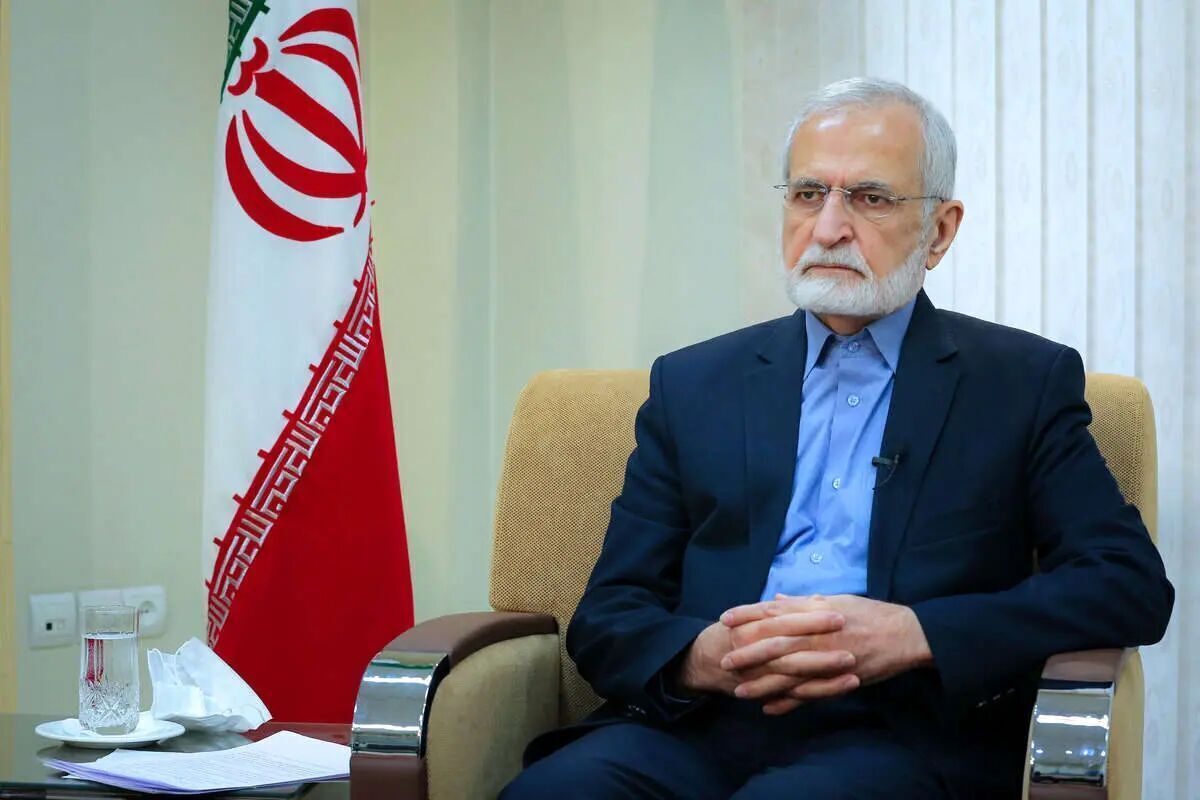
The name “Kamal Kharrazi” in Iran’s political memory is more than anything intertwined with diplomacy and foreign policy; but his record shows that we are dealing with a multifaceted personality who has played an effective and long-lasting role in both politics and science and technology.
Kharrazi, who was the first chief executive officer (CEO) of the Islamic Republic News Agency (IRNA) and the head of the War Propaganda Council, by the decree of the late Imam Khomeini, during the eight-year Sacred Defense against Iraq, was among the figures who were part of at the highest executive levels of the country. By assuming the responsibility of the Ministry of Foreign Affairs, he was present at the forefront of the foreign policy of the Islamic Republic of Iran for 8 years and then, as the head of the Strategic Council for Foreign Relations, by the decree of Martyr Ayatollah Seyyed Ali Khamenei, he played a role as one of the major designers and analysts of the country’s foreign policy.
His presence in the international arena, including as Iran’s ambassador and permanent representative to the United Nations, demonstrated his deep understanding of complex global equations and the power of interaction at high diplomatic levels.
Kharrazi was from a generation of politicians who fathomed diplomacy not at the level of ceremonial relations, but in its strategic depth. He was well aware that in today’s world, power is not defined only in the battlefield, but also through “narrative-building ability” and “persuasion power”. Therefore, during his years of responsibility, he tried to depict the Islamic Republic of Iran as an independent, rational actor with political logic for the world.
In a period when the region and the world were facing intense crises, Kharrazi, relying on a precise understanding of international equations, tried to balance principles and realities; neither to fall into the trap of minimization nor to succumb to passivity. This quality made him one of the most distinctive figures of contemporary Iranian diplomats.
Another outstanding quality of his was “meaningful silence” alongside “thoughtful utterance”. Kharrazi was not one of those politicians who took a hasty stance with every news wave; rather, he spoke when his words could carry a strategic message. This trait had given him a special place among the political and diplomatic elite.
In the domestic arena, his presence in institutions such as the Strategic Council for Foreign Relations and the Expediency Council, by the decree of the martyred leader, signified his continued role in the macro-level governance and policy-making; where experience, rationality, and a long-term perspective are more important than anything else.
Kharazzi’s martyrdom should be considered not only the loss of an individual but also the demise of an “intellectual and strategic capital” — one that requires years of experience, study, and growth in the context of complex global developments to form.
However, what distinguishes Kharrazi from most of his contemporaries is his deep and forward-looking attention to the field of cognitive sciences — a field that is known today as one of the foundations of soft power and modern governance. He was one of the pioneers of the development of this knowledge in Iran and played an important role in its expansion.
His scientific and executive record includes the establishment and support of institutions such as the Institute for Cognitive Science Studies, among others. Also, as the first secretary of the Cognitive Sciences and Technologies Coucil, he tried to elevate this field from a purely academic discussion to a national priority at the policy-making level.
In addition to his executive posts, Kharrazi was also an academic figure; a full professor at the University of Tehran in the field of educational management and planning who always emphasized the link between knowledge and governance. He believed that without a precise understanding of the mechanisms of the human mind and behavior, policy-making would not achieve the desired results.
The combination of these records paints a different picture of him: a politician who was not content with just day-to-day management, but also sought to build intellectual and scientific infrastructures for the future of the country. From diplomacy at the international level to the development of cognitive sciences at home, Kharrazi tried to establish a link between “hard power” and “soft power.”
Overall, his record can be considered an example of combining executive experience, scientific depth, and strategic vision; a role model that is needed more than ever to face the complexities of today’s world.
In the eyes of all the those who have worked with and accompanied Martyr Kharrazi, including yours truly at IRNA and the war propaganda headquarters, he was always a poised, ethical personality with unrivaled scientific depth and cultural richness, who played a pioneering role at critical junctures with his precise understanding of the equations of power,
Yours truly prays for this martyr and his martyred wife, Mansoura Rais-Qassem, who was a retired teacher of the Ministry of Education, as well as a social and cultural activist and a fighter during the Islamic Revolution