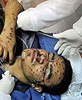
"I can't talk," sobbed consultant paediatrician Nader Dawani, recounting how he was forced to stand up for seven days, while being beaten repeatedly, mainly by a female officer.
"She was the harshest. She used to hit me with a hose and wooden canes, many of which broke on my back," said the frail 54-year-old man.
"They attempted to insert a bottle in my anus," he recounted.
Dawani is one of a group of medics arrested after security forces in the kingdom ruled by the Al-Khalifa dynasty crushed an Islamic Awakening uprising.
They face a plethora of charges, the most serious of which is occupying the Salmaniya Medical Center and possessing weapons, charges that even a commission appointed by the al-Khalifa regime has completely denied.
The doctors also stand accused of spreading false news -- particularly concerning the condition of wounded protesters -- illegal acquisition of medicines and medical facilities, and participating in demonstrations.
Thirteen were convicted by a military court on September 29 and sentenced to between five and 10 years in jail. But under domestic and international pressure they were released and now face retrial before a civil appeals court.
Claims that torture was used against scores of Shiite detainees, including the medics, were upheld in November by the Bahrain Independent Commission of Inquiry, a panel tasked by King Hamad with investigating the crackdown following an international outcry over human rights violations.
Many Shiite medics who were not arrested, like consultant neurosurgeon Taha al-Derazi, lost their jobs just for being photographed at a demonstration.
The medics insist that they are innocent. The commission's report stated the charges that they inflated the number of protesters injured were unfounded, noting that hospital records showed hundreds were admitted during mid-February.
"All my statements to media were related to the wounded," said consultant orthopaedic surgeon Ali Alekri.
Alekri said the medics "need a neutral body," an "international judicial body" to judge them. "We don't trust the Bahraini judicial system."
It was speaking out that got them in trouble, the medics said.
"We are witnesses to the crimes of the regime," said Dawani, who, like most of his sentenced colleagues, and other foreign and Sunni medics, appear in abundant video footage treating casualties at the SMC accident and emergency department.
Rula al-Saffar, the head of the Bahraini Nursing Society, who faces 15 years in jail, said the authorities wanted to humiliate the Shiite elite.
"We are the elite of Bahrain... They want to tell the well-off Shiite families that they can humiliate them," said Saffar, 49, who said she shocked her interrogators when she told them her mother was a Sunni.
During five months in custody, Saffar said she treated more than 200 female fellow prisoners who were subjected to torture and did not escape abuse herself.
"At night they would take me blindfolded. I can smell alcohol fuming with their breaths. One interrogator would say: It is the weekend and we are a group. If you don't confess, we will sleep with you one at a time."
The End
Source: Fars News Agency


