


Photos:
|
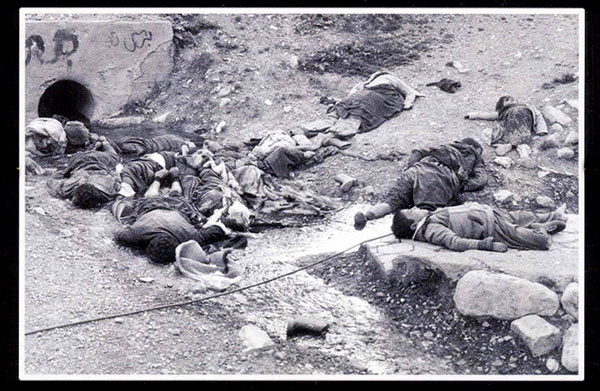
Nerve Agents Halabja, 16March 1988
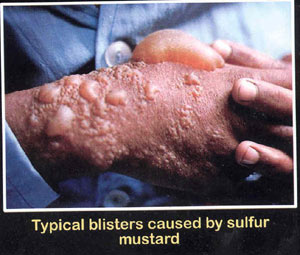
Mustard Agent Types of vesicant or blistering agents (produce vesicles or blisters): § .Mustards Sulfur (chemical warfare agent) Nitrogen (used in chemotherapy) § .Lewisite (Iow freezing temperature) § .Phosgene oxime (Not a true vesicant produces solid lesions Resembling urticaria, not fluid-filled blisters) § Mustard is also called: § .HS: “Hun Stoff” § .H: Impure mustard § .HD: Distilled, pure mustard § .HL: Mustard/agent T § Lost § yperite
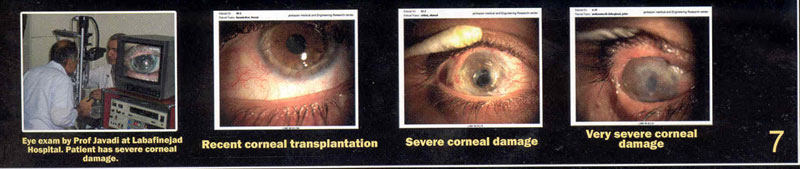
Sulfur mustard characteristics in use as weapon: § .Capsules release liquid mustard, which vaporizes easily § .Characteristic odor resembling garlic § .Additives often used to lower the freezing point and raise toxicity Why is mustard a dangerous chemical weapon? § .Latency period (people unaware of exposure and do not leave) § .High casualty rate § .Lethality low; under5% § .In Iran-Iraq War, lethality from mustard exposure was low, casualties filled the medical facilities § .Long hospitalization and convalescence § .Long term health effects § .Unknown effects § .Easily manufactured from widely available industrial chemicals Chronic Effects of Sulfur Mustard Studies by Iranian scientists working with survivors of the Iran-Iraq War reveal the following to be the most common long-term health effects of exposure to mustard gas: § .Respiratory problems, including .Chronic bronchitis/ bronchiolitis .Stenosis of the air passages .Damage to the cartilage of the trachea ( tracheomalacia) .Recurrent lung infection .Decreased respiratory volume and lung function § .Eye lesions, including § .Corneal damage/melting/perforation § .Dry eye § .Skin problems § .Scars § .Chronic itching associated with dry skin and inflammation § .Psychological disorders Chamber, field, and patch teats run by the U.S. Army during the Second World War, in which over 60.000 U.S servicemen sustained varying degrees of exposure to mustard gas, found the following varying degrees of exposure to mustard gas, and found the following specific health problems to be caused by exposure to mustard caused by exposure to mustard agent: § .Respiratory cancers § .Nasopharyngeal § .Laryngeal § .Lung § .Skin cancer § .Pigmentation abnormalities of skin § .Chronic skin ulceration and scar formation § .Chronic respiratory diseases § .Asthma
§ .chronic bronchitis § .Emphyseme
§ .chronic obstructive pulmonary disease-COPD § .Laryngitis § .Eye problems § .Recurrent corneal ulcerative disease § .Delayed recurrent keratitis of the eye § .Chronic conjunctivitis § .Bone marrow depression and immunosuppressant as an acute effect § .Psychological disorders § .Mood disorders § .Anxiety disorders § .Post-traumatic stress disorder § .Other traumatic stress disorders § .Sexual dysfunction due to scarring The alkylation effects of mustard are responsible for most of the damage: Mustard agents are DNA-allaying agents and are extremely cytotoxic at low doses.DNA alkytion is probably responsible for the mutagen city of mustard agents. These agents also alkylate RNA and proteins and can, at moderate to high doses, produce nonreplicable DNA lesions (genotoxicity).1 |


