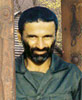
Hamid Ali Samimi who was the commander of the Clinic of Army 25 of Karbala for Mazandaran province (during the Sacred Defense Era) stated this issue to the reporter of Iranian Student’s News Agency (ISNA) and he added: “I got familiar with Haj Hussein Basir since 1981 and I was with him as a war veteran from the time that the brigade 25 of Karbala was formed. When the brigade of Karbala was changed into an Army, Haj Hussein Jan Basir was appointed as the commander of the Ya Rasul (AS) Battalion which most of its forces belonged to the areas of Faridoon Kanar, Babolsar, Mahmoud Abad and West of Mazandaran Province.”?
Through a memory regarding that time he said: “After the unsuccessful military operation ‘Karbala 4’, Haj Basir was in a very tough morale condition from the side of war veterans and commanders, but he was able to tolerate all of the reproaches by the strong belief and reliance that he had in God and he was able to refresh and boost the morale of his forces once again to launch another military operation. Haj Basir had a divine science and he would transfer this science to the other war veterans so simply. In addition of recommending to patience and reliance in God, he would say that we should not backbite at all. Talking about the badness of someone should not be a reason that it takes us to a higher post or position.
He also said: “The battalion of Ya Rasul (S) gradually was divided into tow battalions of the Ya Rasul 1 and Ya Rasul 2 and Haj Basir had got the deputy of the Army 25 of Karbala at that time, that is why many of the war veterans of the Army 25 of Karbala which belonged to Mazandaran would be supported by him in order to work on their farms to get lawful products. In addition to these things, Haj Basir had been able to create a good and friendly relationship among the Army and war veterans in a way that in some of the meetings he would announce that we should have information about the situation of martyrs families and devotees’ families. Each time that he himself would return from the frontiers, he would visit the families of martyrs and devotees of the Army in person.”?
The End


